
For years, fat got blamed for just about everything. People cut it out, bought the low-fat version of everything, and wondered why they were still hungry an hour after eating. Here’s what I’ve learned, and what I tell my team all the time: fat isn’t the enemy. The wrong fats are the problem — and the right fats are some of the most useful foods you can eat.
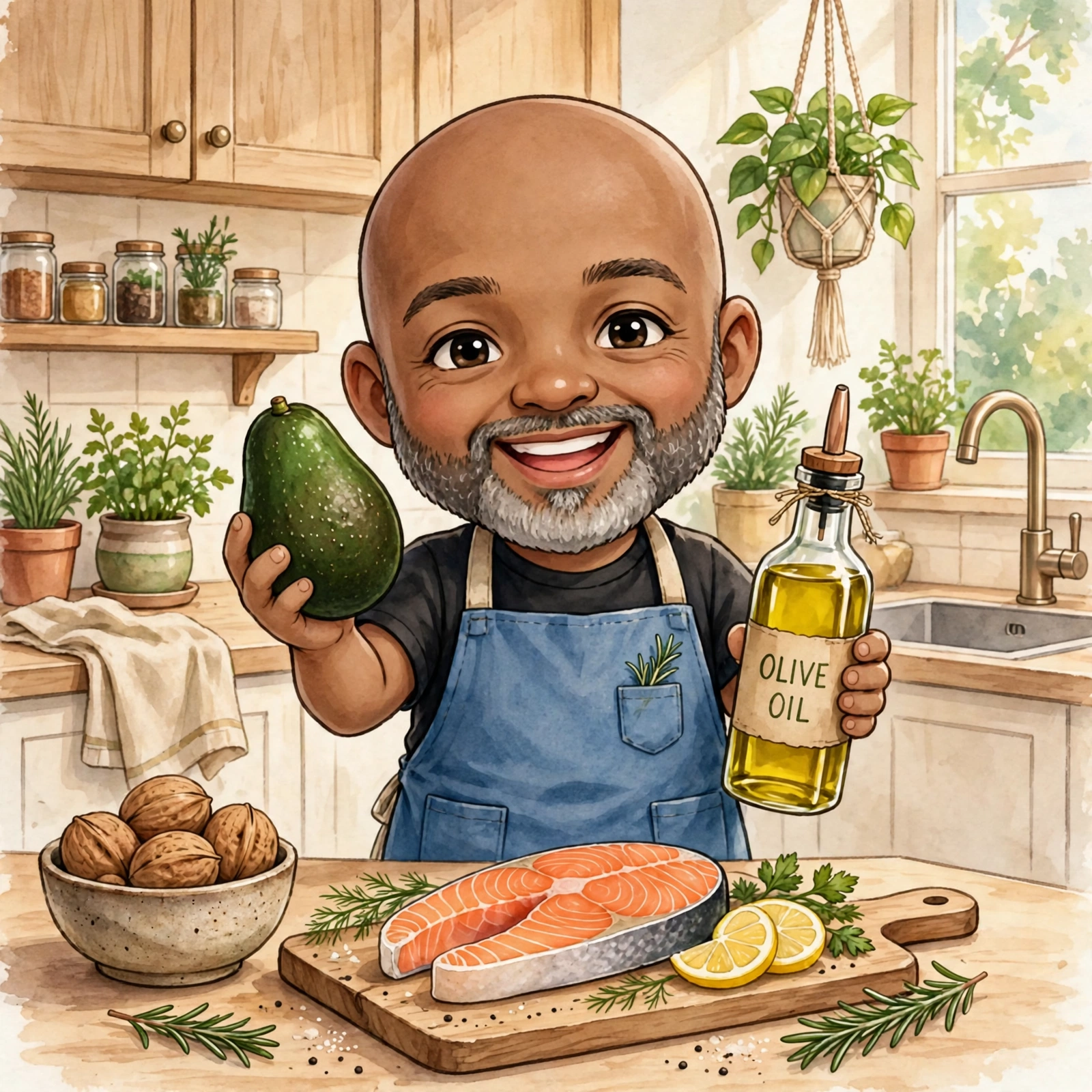
Your body uses healthy fats for real work. They help you feel full after a meal, they help your body absorb vitamins from your food, and they give you steady energy that doesn’t spike and crash the way sugar does. A meal with no fat in it at all might look healthy on paper, but it won’t keep you satisfied for long.
So what counts as a healthy fat? Think foods, not labels.
Olive oil is your everyday friend. A drizzle over vegetables, a spoonful in a salad dressing, a little in the pan when you cook — olive oil is one of the simplest upgrades you can make. It’s been a staple in some of the longest-lived food traditions in the world, and there’s a reason for that.
Avocados do a lot of heavy lifting. Creamy, filling, and easy to add to just about anything — toast, eggs, salads, smoothies. Half an avocado with a meal makes the whole plate more satisfying, and most people find they snack a lot less afterward.
Nuts and seeds are nature’s snack pack. A small handful of almonds, walnuts, or pumpkin seeds gives you healthy fats, a little protein, and fiber all in one. The trick is the portion — a handful, not the whole bag. Keep a small container in your car or your desk drawer and you’ve got a real snack instead of a vending-machine run.
Fatty fish earns its place. Salmon, sardines, mackerel — these are the fish people talk about when they talk about omega-3s. Two servings a week is a solid target, and if fresh fish isn’t in the budget, canned sardines or salmon are a perfectly good option.
Know the fats to go easy on. Fried foods, heavily processed snacks, and the fats hiding in fast food are a different story. It’s not about never having them — it’s about knowing the difference between a food that fuels you and a food that just fills a craving for ten minutes.
Here’s the simple rule I give people: if the fat comes from a real food — an olive, an avocado, a fish, a nut — you’re on the right track. If it comes from a factory and a crinkly bag, save it for once in a while.
This week, try one swap. Cook your vegetables in olive oil instead of reaching for the spray. Add half an avocado to your lunch. Grab a handful of walnuts instead of the chips. Small swaps, done every day, are how eating better actually sticks.
Fat didn’t ruin your diet. Fear of fat did. Eat the good stuff, enjoy it, and let your body do the rest.
— Eric Carter, BigEasy, Team Diamond Breakers
These statements have not been evaluated by the FDA. This product is not intended to diagnose, treat, cure or prevent any disease.
Tell Eric what interests you. Leave your details first, then continue to the presentation, store, or team information.