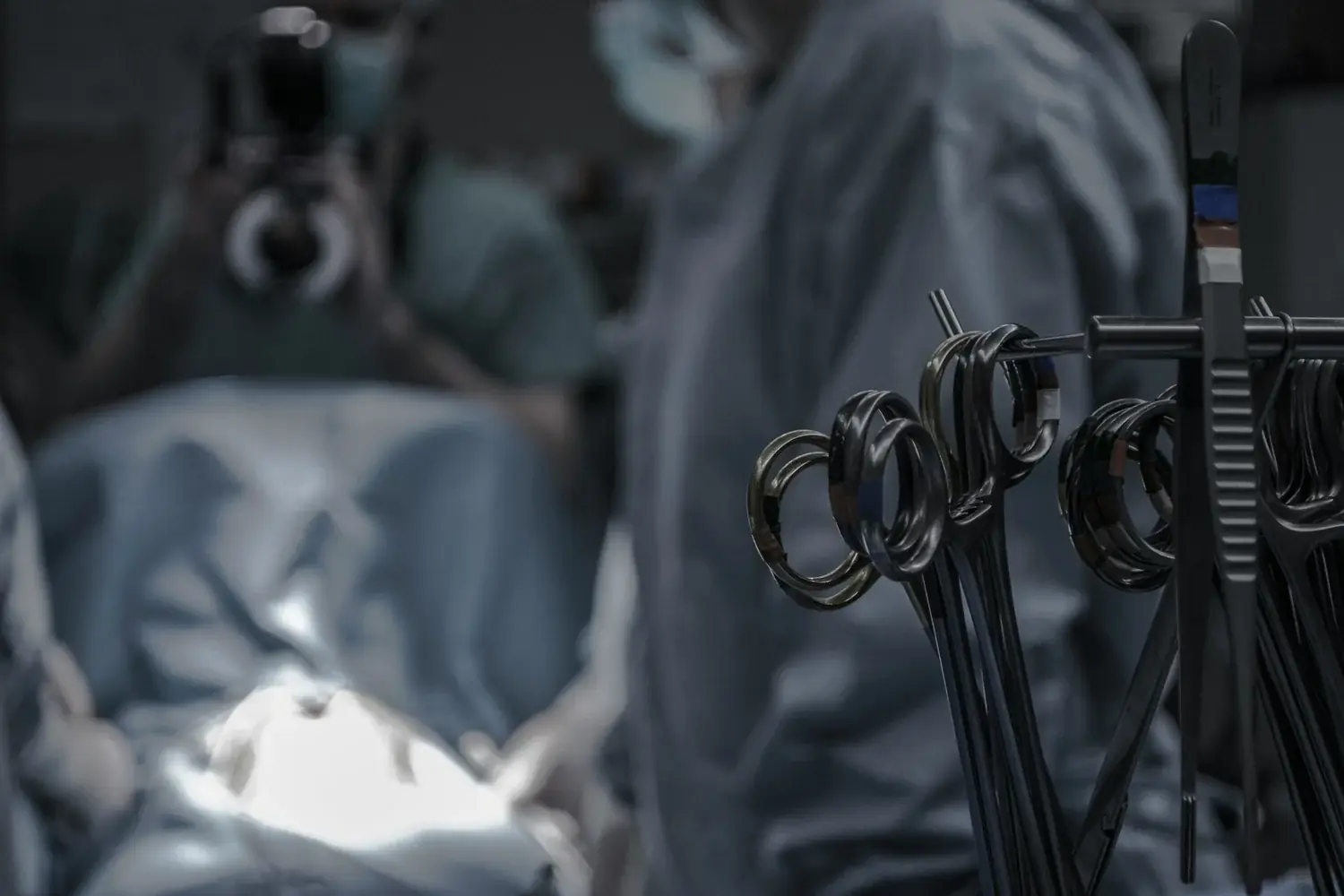
Minimally Invasive Surgery
Awake first. In the office whenever it fits.
Many of the procedures this practice performs happen awake, in the office, with local anesthesia, including laser treatment with the advanced TruBlue laser. When a condition is better served in the operating room, that path is here too.
Awake Laryngeal Voice Surgery
Voice surgery while you are awake.
Many vocal fold procedures can be safely performed awake in office using local anesthesia. Awake surgery allows real-time voice assessment, avoids general anesthesia, and enables rapid recovery.
Injection augmentation
Material is injected to support a vocal fold that is not closing fully, improving the voice without an operating room.
Targeted biopsies
Precise sampling of vocal fold tissue performed awake, so diagnosis starts without general anesthesia.
TruBlue laser treatment
Laser treatment with the advanced TruBlue laser, delivered through a fine fiber while you are awake and your voice can be heard live.
The TruBlue technology page →Botox injections
Botulinum toxin injections for conditions including spasmodic dysphonia, accomplished easily awake in the office.
The Botox page →Featured Technology
The TruBlue laser is the centerpiece of awake voice surgery here.
Its 445 nm wavelength is strongly absorbed by hemoglobin, letting treatment target the vessels that feed vocal fold lesions while protecting the surface your voice depends on.
Laryngeal voice surgery with general anesthesia
For select voice and airway conditions, surgery is performed endoscopically under general anesthesia. This approach allows precise treatment of vocal fold lesions while preserving surrounding tissue. Traditional mini “micro” tools and advanced laser technology enable accurate treatment with a focus on voice quality and long-term function.
R-CPD: the inability to burp
Retrograde cricopharyngeal dysfunction (R-CPD) is characterized by an inability to burp, often associated with bloating, chest pressure and discomfort. Botulinum toxin injection into the cricopharyngeus muscle can restore normal relaxation and allow belching. The procedure usually requires just several minutes of general anesthesia. Cricopharyngeal myotomy can be considered in select patients with CO2 laser.
Endoscopic sinus surgery
Endoscopic sinus surgery is performed under general anesthesia, with specialized cutting tools passing through the nostrils. No external cuts or scars are involved. It is designed to restore normal sinus drainage and ventilation while preserving healthy tissue, and is used when medical therapy is insufficient or when more advanced sinus disease is present. Most patients will have dissolving foam packing during the first postop week, which slowly disintegrates and is flushed out by the saline sinus rinses.
Also Done in the Office
Three more minimally invasive treatments.
VivAer
A quick, awake, in-office procedure that treats nasal valve collapse, a common cause of nasal obstruction. Radiofrequency energy gently reshapes the nasal airway without cutting, packing or external incisions.
The VivAer page →RhinAer
A minimally invasive treatment for chronic runny nose caused by vasomotor or non-allergic rhinitis. Radiofrequency energy is applied to overactive nerves at the back of the nose, and the procedure does not alter normal nasal structure.
The RhinAer page →Balloon sinuplasty
For chronic sinusitis or recurring sinus infections when medical therapies are not helping, a small balloon catheter gently dilates blocked sinus drainage pathways. Performed in the office, wide awake or with relaxing medicine.
The balloon sinuplasty page →Get Started
Wondering which approach fits you?
That is decided together at your evaluation. Book a visit and bring your questions.